

You've seen them. "Entry-level role. Requires 7 years of experience. Must be AWS Certified and fluent in three languages. Salary: competitive." That kind of posting isn't just annoying. It's a symptom of a broken system, and knowing how to call out job postings like these is the first step toward changing things. 60% of job seekers abandon postings due to vague pay, unclear role descriptions, and excessive application demands. You're not alone in your frustration. And you don't have to stay silent about it.
Table of Contents
- Key takeaways
- What to know before calling out a job posting
- Step-by-step guide to calling out a problematic posting
- How to verify a job posting before or after calling it out
- Common mistakes when calling out job postings
- What actually happens when you call out job postings
- My take on why this work actually matters
- Start calling it out with Jobgatekeeping
- FAQ
Key takeaways
| Point | Details |
|---|---|
| Spot the red flags early | Vague descriptions, missing pay ranges, and bloated requirements signal postings worth calling out. |
| Prepare before you contact | Gather evidence and specific examples from the posting before reaching out to any recruiter. |
| Time your outreach strategically | Contact recruiters Tuesday through Thursday mid-morning for the best chance of a real response. |
| Verify before you act | Check the company's careers page and search the requisition number to confirm the job is real. |
| Document everything | Keep records of all interactions and follow-ups to build accountability and protect yourself. |
What to know before calling out a job posting
Not every frustrating job ad deserves the same response. Some postings are genuinely unreasonable. Others are just poorly written. Knowing the difference helps you decide when calling out is worth your energy and when moving on is the smarter play.
Warning signs that make a posting worth challenging
Start by identifying what specifically makes the listing problematic. The most common offenders include:
- ✗ Excessive qualifications for entry-level roles. Think "Junior Developer" requiring 5+ years of React experience and an AWS Certified Solutions Architect credential.
- ✗ Missing or vague compensation. "Competitive salary" tells you nothing. It's a red flag for poorly defined roles with unrealistic expectations.
- ✗ Responsibilities that describe three jobs in one. Social media manager + graphic designer + SEO strategist + copywriter. For one salary. No.
- ✗ Old posting dates with no updates. A listing that's been up for six months with zero changes is likely a ghost job or a stalled pipeline role.
- ✗ No hiring manager info or point of contact. Vague descriptions and absent contact details are two of the clearest signals that a posting isn't going anywhere.
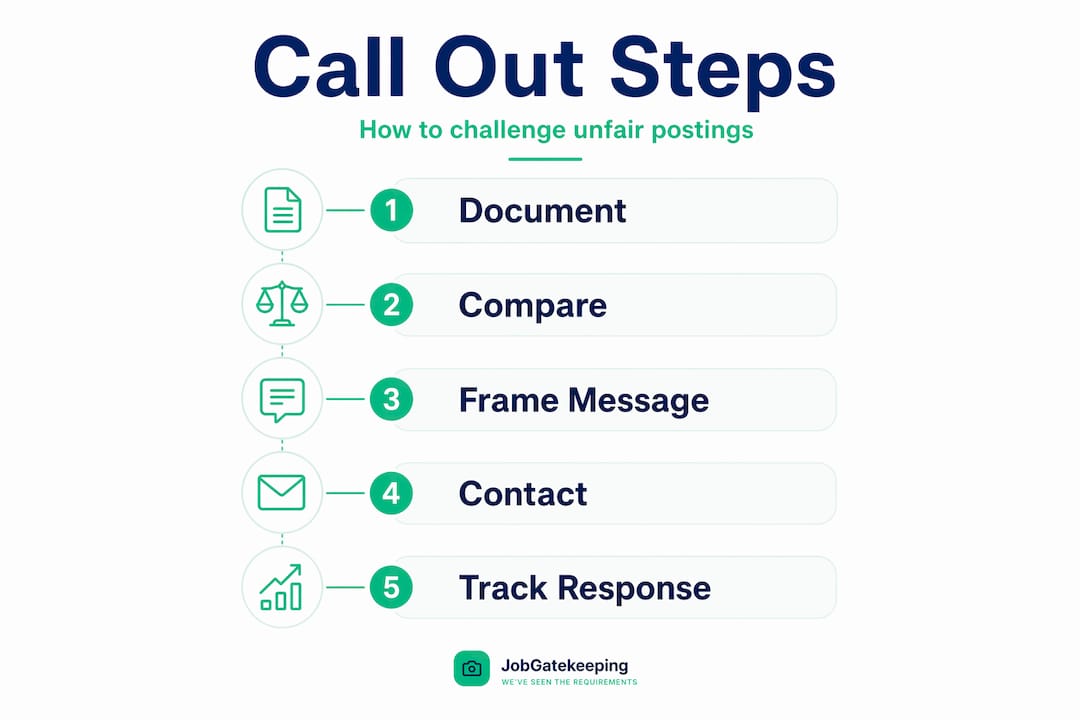
Before you pick up the phone or draft an email, document your case. Screenshot the posting. Note the date it was published. Write down the specific lines that are problematic and why. This preparation turns a vague complaint into a focused, credible point.
Pro Tip: Paste the job requirements into a plain text document alongside comparable market data from LinkedIn Salary or Glassdoor. If the requirements are wildly out of step with the role's pay band in your market, that gap is your evidence.
Understanding why postings lack transparency also helps you frame your message. Sometimes it's company policy. Sometimes it's a recruiter who copied an old template. Knowing the likely cause shapes how you approach the conversation.
Step-by-step guide to calling out a problematic posting
Here's how to actually do it. Whether you're calling a recruiter, emailing HR, or posting publicly, these steps keep you professional, specific, and effective.

01. Find the right contact person. Don't blast a generic company inbox. Search LinkedIn for the recruiter or HR rep attached to the role. Look for the hiring manager's name in the job description or on the company's careers page. A real name changes everything about how your message lands.
02. Time your outreach right. Optimal recruiter contact times are Tuesday through Thursday mid-morning. Avoid Monday mornings and Friday afternoons entirely. You want to catch someone who has the bandwidth to actually engage with you.
03. Structure your message clearly. Whether by phone or email, lead with who you are, reference the specific posting (including the job title and requisition number if available), and then get to your point. Here's an example:
"Hi, my name is Alex. I came across your posting for [Job Title], requisition number 4821. I noticed the role is listed as entry-level but requires seven or more years of experience. I wanted to flag that disconnect and ask whether the listing reflects the actual seniority level you're hiring for."
That's it. Short. Specific. Professional. Calls under three minutes that stay focused on a genuine question are far more effective than long, rambling critiques.
04. Ask a direct question, then listen. Don't lecture. Pose your concern as a question and let the recruiter respond. This approach gets you more information and avoids putting people on the defensive.
05. Note the response. Write down what they say, when they said it, and whether they commit to any changes. If they say they'll update the posting and don't, that's information too.
06. Use alternate channels if needed. If phone outreach gets you nowhere, try a direct LinkedIn message. For truly egregious postings, uploading a screenshot with a clear caption to a platform like Jobgatekeeping puts the issue in front of a community that can respond collectively. 🚨
Pro Tip: When reaching out via email, keep your subject line specific: "Question about [Job Title] posting, Req. 4821." A vague subject line gets ignored. A specific one signals you've done your homework.
How to verify a job posting before or after calling it out
Before you spend time crafting a message, make sure the job actually exists. Ghost jobs absorb applications without any intention to hire. They inflate company databases, damage candidate experience, and waste everyone's time.
Here's a quick comparison of reliable vs. unreliable verification signals:
| Signal | Reliable indicator | Unreliable indicator |
|---|---|---|
| Posting on company careers page | ✓ Strong sign it's active | ✗ Only on third-party boards |
| Named hiring manager or recruiter | ✓ Real accountability exists | ✗ Generic HR email only |
| Posting date within last 30 days | ✓ Likely still active | ✗ Six months old, no update |
| Requisition number present | ✓ Can be searched and tracked | ✗ No tracking info at all |
| Company has recent hiring news | ✓ Growth signals real openings | ✗ Layoff news but "actively hiring" |
Ghost jobs often don't appear on the employer's own website at all. If you can't find the role on their careers page, that's a serious red flag. Don't apply and definitely don't spend hours on a cover letter.
Take the requisition number from the posting and search it in quotes on Google. Searching the req number in quotes often reveals whether that same listing has been recycled across months or years, which tells you the role is either permanently unfilled or a permanent pipeline placeholder.
Also cross-reference LinkedIn for any recent hiring activity at the company. If their team page hasn't grown in a year and they claim to be hiring aggressively, something doesn't add up.
Sending a brief verification inquiry to the recruiter is a legitimate move. A two-sentence message with the requisition number gets better responses than a long email. Something like: "Hi, I'm interested in the [Job Title] role, req. 4821. Can you confirm it's still active and accepting applications?" Simple. Direct. Effective.
Common mistakes when calling out job postings
🔥 Calling out a bad job posting feels good. Doing it wrong can backfire. Here are the pitfalls that undercut your message:
- Going in too emotional. Venting frustration in the first sentence puts recruiters on the defensive and ends the conversation before it starts. Lead with specifics, not feelings.
- Calling too early after applying. The ideal window is 5 to 7 business days after applying. Any sooner and you look impatient. Any later and the hiring cycle may already have moved on.
- Not having a specific point. "This posting is confusing" is not a useful critique. "The posting says entry-level but requires seven years of experience, which contradicts industry standards for this role type" is.
- Ignoring company communication culture. A scrappy startup might welcome direct feedback. A large corporation might route your message to a black hole. Check their Glassdoor reviews to gauge how HR actually communicates.
- Failing to document the interaction. If you raise an issue and nothing changes, that pattern matters. Screenshot your messages, note the date of your call, and save any responses you receive. This documentation supports the broader community case for accountability.
The most effective call-outs combine professionalism with precision. Emotion without evidence gets dismissed. Evidence without a clear ask gets ignored. You need both, delivered calmly.
What actually happens when you call out job postings
Calling out a bad posting rarely triggers an immediate rewrite. But that doesn't mean it's pointless. Here's what actually shifts over time.
"Transparency about timelines and hiring criteria correlates with better candidate experiences and often signals fairer processes." SHRM research consistently links clearer communication to improved hiring outcomes for both sides.
Individual call-outs create feedback loops. When enough candidates flag the same issues on platforms like Jobgatekeeping or directly to recruiters, patterns get noticed. Some companies do update postings after receiving direct feedback. Others don't, and that behavior becomes part of their public reputation in the candidate community.
On a personal level, calling out a bad posting protects your time. Instead of pouring hours into an application for a ghost job or a role with impossible requirements, a five-minute verification inquiry can save you a week of wasted effort. That's a real, immediate benefit.
And when you share what you find publicly, you're building a collective record. Your screenshot, your caption, your experience adds to a growing database of what bad job postings look like in practice. Together, those examples create pressure for change.
My take on why this work actually matters
I've spent years watching job seekers spin their wheels on listings that were never serious to begin with. What strikes me most isn't the absurdity of individual postings. It's how normalized the absurdity has become. People see "5 years experience required for entry-level" and assume they're just underqualified. They're not. The posting is broken.
What I've found is that the act of calling out is itself clarifying. When you take the time to document what's wrong with a listing, you sharpen your own understanding of what a fair posting looks like. That clarity makes you a better, more selective candidate. You stop applying to everything and start targeting what's genuinely worth your time.
I also think the community angle is underrated. Platforms built around fair hiring practices don't just expose bad behavior. They set a visible standard for what good looks like. Employers who see their listings called out publicly tend to think more carefully the next time. Not always. But often enough.
The uncomfortable truth is that most companies post bad listings because nobody pushes back. You pushing back, professionally and specifically, is a form of market correction. It matters more than you think.
— Steggy
Start calling it out with Jobgatekeeping
You've identified the red flags. You know how to verify a listing and structure a professional call-out. Now put it into practice.
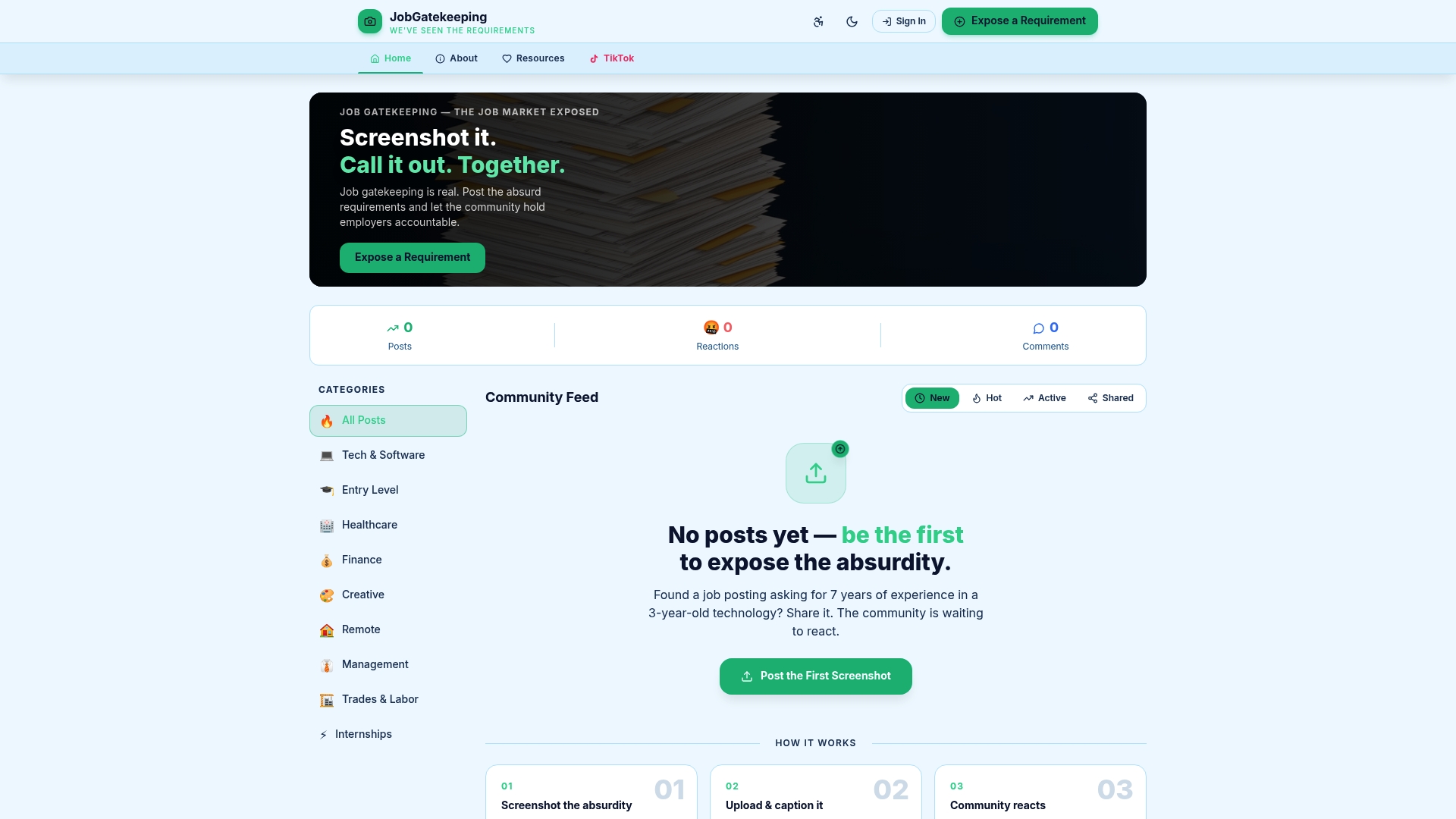
Jobgatekeeping exists precisely for this moment. When you find a posting demanding five certifications for a $35k coordinator role, or an "unpaid internship" disguised as a full-time position, you have somewhere to take it. Capture a screenshot, upload it with a caption that names the issue, and let the community respond. The platform is built for exactly this kind of collective accountability. Explore the Jobgatekeeping platform to start sharing what you're seeing. For a deeper breakdown of what fair listings actually look like, check out the guide on building a fair job posting checklist. Fair hiring starts with informed candidates speaking up. That's you.
FAQ
What makes a job posting worth calling out?
A posting is worth calling out when it contains excessive qualifications for the stated level, missing compensation details, or requirements that are internally contradictory. Vague descriptions and absent hiring manager info are the clearest red flags.
How do I verify if a job posting is real?
Check whether the role appears on the company's official careers page and search the requisition number in quotes on Google to spot recycled or stale listings. Ghost jobs often don't appear on the employer's own website.
When is the best time to contact a recruiter about a bad posting?
Contact recruiters Tuesday through Thursday mid-morning and wait 5 to 7 business days after applying. Calling too soon reduces effectiveness and can make you appear unprepared.
What should I say when I call out a job posting directly?
Keep it brief and specific. Reference the job title and requisition number, state the specific issue, and ask a direct clarifying question. Calls under three minutes with a focused, professional tone get the best results.
Can one person's call-out actually change anything?
Yes, especially when combined with others. Transparency in hiring criteria correlates with better outcomes for candidates, and public call-outs on platforms like Jobgatekeeping create visible pressure that individual private messages don't generate on their own.