

You send in your resume, wait two weeks, hear nothing, and then repeat the cycle with a dozen other employers. Sound familiar? 51% of job seekers changed their entire approach simply because employers never responded to their applications. Opaque hiring processes don't just waste your time. They force you into guessing games, weaken your strategy, and erode your confidence. This article gives you concrete, actionable tips to cut through the fog, demand the clarity you deserve, and take back control of your job search before another opportunity slips away silently.
Table of Contents
- Ask precise questions at every stage
- Follow up on timelines and next steps
- Compare hiring process transparency across employers
- Refine your job application strategy for more transparency
- Why true transparency starts with job seekers
- Discover more strategies for a fair job search
- Frequently asked questions
Key Takeaways
| Point | Details |
|---|---|
| Ask direct questions | Inquiring about role history, priorities, and success factors gives you clarity upfront. |
| Always follow up professionally | Respectful, well-timed follow-ups show interest without overwhelming recruiters. |
| Compare transparency levels | Evaluating different employers’ communication helps you spot the best workplaces. |
| Adapt your strategy | Prioritize transparent employers to save time and target quality opportunities. |
Ask precise questions at every stage
Now that you see the cost of opacity, start your transparency journey with better questions. Most job seekers walk into interviews prepared to answer questions but rarely prepared to ask the right ones. That's a missed opportunity. Asking targeted, revealing questions signals confidence, shows you've done your homework, and forces the employer to be upfront about what they actually need.
One of the most powerful questions you can ask is why the position is open. Is it a backfill because someone left? A newly created role due to growth? Or is it a revolving door because the team has a management problem? The answer tells you a lot about what you're walking into. A new role suggests the company is expanding and may have some flexibility on requirements. A backfill could mean you're replacing someone who was a perfect fit, which raises the bar. A repeated backfill is a red flag worth investigating further.
You should also ask the recruiter or hiring manager what their top priorities are for this role and what makes a candidate truly stand out. Most job descriptions are written by committee and end up vague. The hiring manager's real priorities are often different from what's listed. Getting them to articulate what success looks like in the first 90 days is gold. It helps you tailor your answers and assess whether the role is actually a good fit for your skills.
Don't shy away from asking directly if the interviewer has any concerns about your background or experience. This question feels uncomfortable, but it's one of the most transparent moves you can make. It gives you a chance to address objections in real time rather than wondering why you never got a callback. Employers who respect candidates will appreciate the directness.
According to recruiter-sourced advice, you should also ask what commonly causes candidates to struggle in this role. That single question can reveal internal dysfunction, unrealistic expectations, or a skills gap you can proactively address.
Here's a quick checklist of questions to bring to every interview:
- Why is this position open right now?
- What does success look like in the first 90 days?
- What are the top three qualities that make someone thrive here?
- Do you have any concerns about my background for this role?
- What typically causes candidates to struggle in this position?
- What does the decision-making timeline look like from here?
You can find additional guidance on what to ask recruiters to make sure you're covering all your bases before, during, and after the interview.
Pro Tip: Print this checklist and bring it to every interview. Checking off each question as you go keeps you focused and ensures you leave with the information you need to make smart decisions.
Follow up on timelines and next steps
Once you've asked good questions, it's important to keep communication lines open. A great interview means nothing if you disappear afterward and wait passively for a response. Following up professionally is one of the most underused tools in a job seeker's toolkit. It reinforces your interest, demonstrates professionalism, and keeps you visible when the hiring team is comparing candidates.
Here's a step-by-step approach to following up effectively:
- Send a thank-you email within 24 hours. Keep it brief but specific. Reference something meaningful from the conversation to show you were engaged. Close by asking about the next steps in the process and the expected timeline for a decision.
- Confirm the timeline they gave you. If the recruiter said they'd be in touch within a week, note that date. This is your anchor point for follow-up.
- Wait 1-2 business days past the stated timeline before reaching out again. Contacting them too early signals impatience. Waiting too long signals disinterest. The 1-2 day window is the professional sweet spot, as hiring timeline research confirms.
- Keep your follow-up message short and warm. Something like: "I wanted to check in on the timeline we discussed. I remain very interested in the role and would love to know if there are any updates."
- Don't follow up more than twice without a response. At that point, you have your answer, and it's time to redirect your energy.
For more job search follow-up tips that keep you professional without coming across as pushy, there are practical scripts and templates worth bookmarking.
"A well-timed, courteous follow-up demonstrates engagement without desperation."
This is especially true when you're juggling multiple interviews. If you have another offer or a competing interview at a final stage, you can mention it professionally in your follow-up. Something like: "I wanted to let you know I've received another offer and need to respond by Friday. Your company remains my top choice, and I'd love to know if a decision is near." This is not pressure. It's transparency, and it often accelerates timelines dramatically. You can also review successful interview strategies to ensure your overall presentation matches the professionalism of your follow-up communication.

Pro Tip: Set calendar reminders for every timeline an employer gives you. When the date passes, your reminder triggers the follow-up automatically. No more guessing when it's appropriate to check in.
Compare hiring process transparency across employers
Following up helps track individual opportunities, but comparing practices across employers elevates your job search strategy. Not all employers treat candidates equally, and learning to spot the difference early saves you enormous time and emotional energy. The goal is to build a mental scorecard for every employer you engage with.
Here's a simple framework to rate employers on transparency:
| Employer | Clear timeline given | Open to questions | Prompt responses | Feedback offered | Transparency score |
|---|---|---|---|---|---|
| Company A | Yes | Yes | Within 24 hrs | Yes | High |
| Company B | Vague | Partially | 3-5 days | No | Medium |
| Company C | No | No | No response | No | Low |
Use this kind of table in a spreadsheet to track your active applications. Over time, patterns emerge. Companies with high transparency scores tend to have better cultures, clearer expectations, and more respectful onboarding processes. Companies with low scores often signal deeper organizational problems.
Green flags to watch for:
- The recruiter proactively shares the hiring timeline without being asked
- The hiring manager welcomes your questions and answers them specifically
- You receive a follow-up email after the interview within 48 hours
- The job description includes salary range and clear requirements
- The process has a defined number of steps explained upfront
Red flags that signal opacity:
- No response to your application after two weeks, with no automated acknowledgment
- Vague answers to direct questions about the role or team
- Repeated rescheduling without explanation
- Pressure to accept an offer without adequate time to review
- No feedback offered after rejection
The data backs this up. Opaque hiring processes cause 48% of job seekers to resort to "spray and pray" applications, flooding employers with generic resumes rather than targeted, thoughtful ones. This creates a cycle where employers get overwhelmed, screening becomes more automated and impersonal, and candidates feel even more invisible. Understanding how automating recruitment process tools affect candidate experience can help you navigate systems that are designed to filter, not engage.
Breaking that cycle starts with you choosing employers who value your time as much as you value theirs.
Refine your job application strategy for more transparency
Understanding transparency levels allows you to actively reshape your job application habits. This isn't just about feeling better during the process. It's about improving your actual outcomes. When you focus your energy on employers who communicate clearly, you spend less time in limbo and more time in meaningful conversations that lead to real offers.
The data is clear on what opacity costs job seekers:
| Impact of opaque hiring | Percentage of job seekers affected |
|---|---|
| Changed their job search approach | 51% |
| Would be more selective with feedback | 76% |
| Resort to "spray and pray" applications | 48% |
Source: Monster survey via HR Dive
These numbers reveal something important. The majority of job seekers are already adjusting their behavior because of employer opacity. The question is whether you're adjusting strategically or just reacting out of frustration.
Here are smart strategies to prioritize quality over quantity in your applications:
- Research employer communication style before applying. Check Glassdoor and Blind for reviews that mention the interview process specifically. Look for phrases like "no feedback," "ghosted after final round," or "very transparent and organized."
- Set a weekly application limit. Instead of sending out 30 generic applications, send 10 tailored ones to companies that show green flags. Quality beats volume every time.
- Track every application in a spreadsheet. Include the date applied, contact name, timeline given, follow-up dates, and outcome. After a month, you'll see which types of employers respond and which don't.
- Disengage from employers who go silent. If a company doesn't respond to two follow-ups after a stated timeline, move on. Your energy is finite. Spend it where it's valued.
- Prioritize companies that post salary ranges. This is one of the clearest signals of a transparent employer. If they're upfront about pay, they're likely upfront about other things too.
Refining your strategy this way doesn't just make your search more efficient. It makes it more emotionally sustainable. You stop feeling like you're shouting into a void and start feeling like a professional making informed decisions.
Why true transparency starts with job seekers
Here's a perspective that most career advice skips over: transparency in hiring isn't only the employer's responsibility. Job seekers can and should model the kind of communication they want to receive. When you ask clear, direct questions, follow up professionally, and disclose relevant information like competing offers, you set a tone. That tone often shapes how the employer treats you in return.
Think of it this way. If you walk into an interview vague about your timeline, your interest level, or your concerns, you're inviting vague treatment back. But when you say, "I have a competing offer and need to decide by Thursday, but your company is my first choice," you've done something powerful. You've been transparent. And most reasonable employers will respond in kind by accelerating their process or at least giving you a real answer.
Handling competing offers thoughtfully is one of the most effective ways to surface an employer's true communication style. How they respond to that disclosure tells you everything about how they'll treat you as an employee.
"The more transparent you are, the more likely you are to attract a transparent employer."
That said, there's a balance. Limit your follow-ups to two maximum. Reaching out more than that tips from professional into desperate, and it can actually cause employers to disengage. Transparency is about honest, measured communication. Not oversharing or over-pursuing.
Pro Tip: Before every application, ask yourself whether you'd be comfortable being fully honest with this employer about your timeline, concerns, and competing options. If the answer is no, that discomfort is a signal worth paying attention to.
Discover more strategies for a fair job search
Ready to put these transparency tips into action? At JobGatekeeping, we believe every job seeker deserves a hiring process that respects their time and intelligence. Too many employers hide behind vague job postings, impossible requirements, and radio silence after interviews.
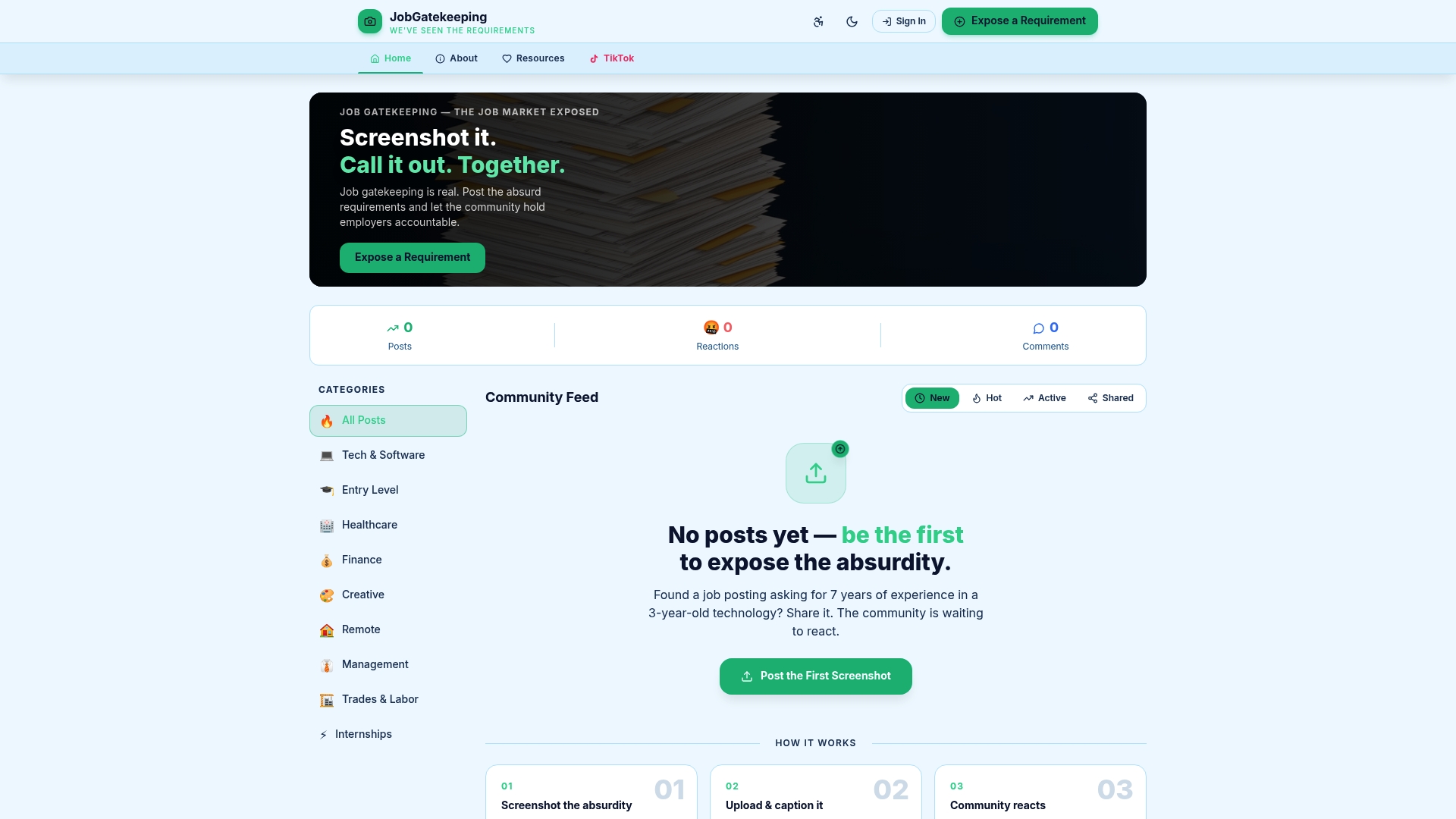
When you uncover hiring practices that cross the line, you're not just helping yourself. You're contributing to a community that holds employers accountable. JobGatekeeping gives you the tools to identify gatekeeping tactics, share what you've seen, and connect with others who are fighting for the same fair treatment. Explore our guides, browse real hiring horror stories submitted by job seekers like you, and start applying smarter today.
Frequently asked questions
What questions can I ask to check hiring process transparency?
Ask why the position is open, what the hiring manager values most, and whether they have any concerns about your background. These targeted recruiter questions reveal how open and organized the employer truly is.
How often should I follow up after an interview?
Wait 1-2 business days past any timeline the employer provided before checking in, and always keep your message brief and polite. Consistent, professional follow-up as outlined in hiring timeline guidance shows interest without crossing into pressure.
Why do employers keep hiring processes so opaque?
Some employers lack structured hiring systems, while others avoid transparency to sidestep internal issues or legal concerns. Either way, opaque hiring drives away quality candidates and creates inefficient, high-volume application floods that hurt everyone.
Should I disclose competing job offers to speed up the process?
Yes, mentioning a competing offer politely and factually can prompt faster decisions from employers who are genuinely interested. Just keep it professional and avoid repeating it, as interview inquiry advice recommends, since too much pressure can backfire.