

Most job postings are working against the people writing them. Hiring managers spend hours crafting detailed role descriptions, only to slap a vague or gatekeeping caption on top that sends qualified candidates running. Meanwhile, job seekers burn out scrolling through postings stuffed with unrealistic demands and zero pay information. We've seen it all on this platform — "entry-level" roles requiring five years of experience, unpaid internships framed as "opportunities," and captions so corporate they say nothing at all. This article breaks down exactly how to write job posting captions that are honest, fair, and effective — for everyone involved.
Table of Contents
- Why your job posting captions matter
- What to include in an effective job posting caption
- Step-by-step: Writing and testing your caption
- Common mistakes to avoid when writing captions
- What most hiring guides miss about job posting captions
- How JobGatekeeping helps you create better job posting captions
- Frequently asked questions
Key Takeaways
| Point | Details |
|---|---|
| Salary transparency drives applicants | Stating pay ranges in captions attracts more and better candidates. |
| Keep captions concise | Focus on essentials—role, salary, and key requirements only. |
| Test and improve | Use A/B testing to find which wording draws relevant talent. |
| Avoid gatekeeping | Don’t add unnecessary requirements or jargon that discourages diverse applicants. |
Why your job posting captions matter
Your caption is the first thing a candidate sees. Before they read the full description, before they check your company page, before they decide if this role is even worth their time — they read the caption. That's the moment where you win them over or lose them entirely.
Here's the problem. Most captions are either wildly vague ("We're looking for a passionate self-starter!") or instantly disqualifying ("Must have 10+ years of experience in a junior capacity"). Neither approach attracts the right people. Vague captions generate floods of mismatched applications. Overloaded captions push away strong candidates who don't meet every bullet point on a wish list.
Transparency changes everything. When hiring managers are upfront about the role, pay, and expectations in the caption itself, trust goes up immediately. Candidates don't have to guess or waste time applying to something that was never a fit.
The numbers back this up. Salary transparency not only attracts 44% more candidates but raises wages 1.3% overall through competition, benefiting existing employees too, with no negative impact on employment. That's not a minor bump. That's a fundamentally different applicant pool — larger, more engaged, and more trusting of your organization before they even hit "Apply."
"A job posting caption is not a teaser — it's a promise. When that promise is unclear, candidates assume the worst."
Fair hiring starts with honest captions. When you use your fair hiring checklist to audit what you're putting in front of candidates, you quickly realize how much gets left out that actually matters. Role clarity. Compensation. Real expectations. These aren't perks — they're the baseline.
What the data says about caption impact
Here's a quick look at how caption quality affects hiring outcomes:
| Caption Type | Average Apply Rate | Candidate Quality | Trust Signal |
|---|---|---|---|
| Vague, no salary | Low | Mixed | Weak |
| Detailed, with salary | High | Strong | Strong |
| Jargon-heavy | Very low | Poor match | Negative |
| Clear and concise | High | Excellent match | Very strong |
The pattern is obvious. Clear, transparent captions get better results every time.
What to include in an effective job posting caption
With the importance established, we can now outline what an effective caption must include. This isn't about writing a novel. It's about packing the right information into a tight, honest statement that respects the candidate's time.
Here's what every caption needs:
- Concise role title — Use a real title people actually search for. "Growth Hacker Ninja" is not a job title. "Marketing Coordinator" is.
- Salary range — A specific range, not "competitive pay." Candidates deserve to know upfront if this role fits their financial needs.
- Core responsibilities — Two or three lines max. What does this person actually do most days?
- True requirements only — If someone without a master's degree can do the job, don't list it as a requirement. Ask yourself: "Would I reject a perfect candidate because they're missing this?"
- A brief, honest culture note — One sentence is enough. "We're a fully remote team that meets weekly" tells candidates more than "We have a vibrant, collaborative culture."
- Clear next steps — Tell them exactly what to do. Apply here. Send a portfolio. Email this address.
Best practices for writing job descriptions show that 70% of candidates want culture details in a posting, but adding too much depth in the caption itself overwhelms readers. Keep culture brief in the caption and expand in the full description.
Pro Tip: Read your caption out loud before publishing. If it sounds like corporate-speak or sounds confusing even to you, candidates will feel the same way. Aim for something a friend could understand in 10 seconds.
The job posting checklist we recommend gives you a structured way to review every element before you hit publish. It's especially useful for catching accidental gatekeeping language you might not even notice until someone else flags it.
Here's an example of a caption that checks all the boxes:
✓ "Customer Support Specialist | $42,000–$50,000/yr | Remote | Help our users solve real problems via chat and email. 2+ years of support experience required. Apply at [link] by July 15."
That caption is honest, specific, and respectful. Now compare it to this:
✗ "We're looking for a passionate, driven support rockstar to join our dynamic team. Competitive salary. Must be a team player."
Absolutely nothing useful. No salary. No requirements. No action step. That second version is the kind of posting we call out every day here.

Step-by-step: Writing and testing your caption
Now, let's turn those principles into action through a repeatable, results-driven process. Writing a good caption isn't a one-and-done task. You draft it, test it, measure results, and improve. That's how you get consistently strong candidates over time.
01. Draft your first caption Start with the essentials only. Role title, salary range, top one or two responsibilities, real requirements, and a clear call to action. Write it in plain English. Keep it under 75 words if possible.
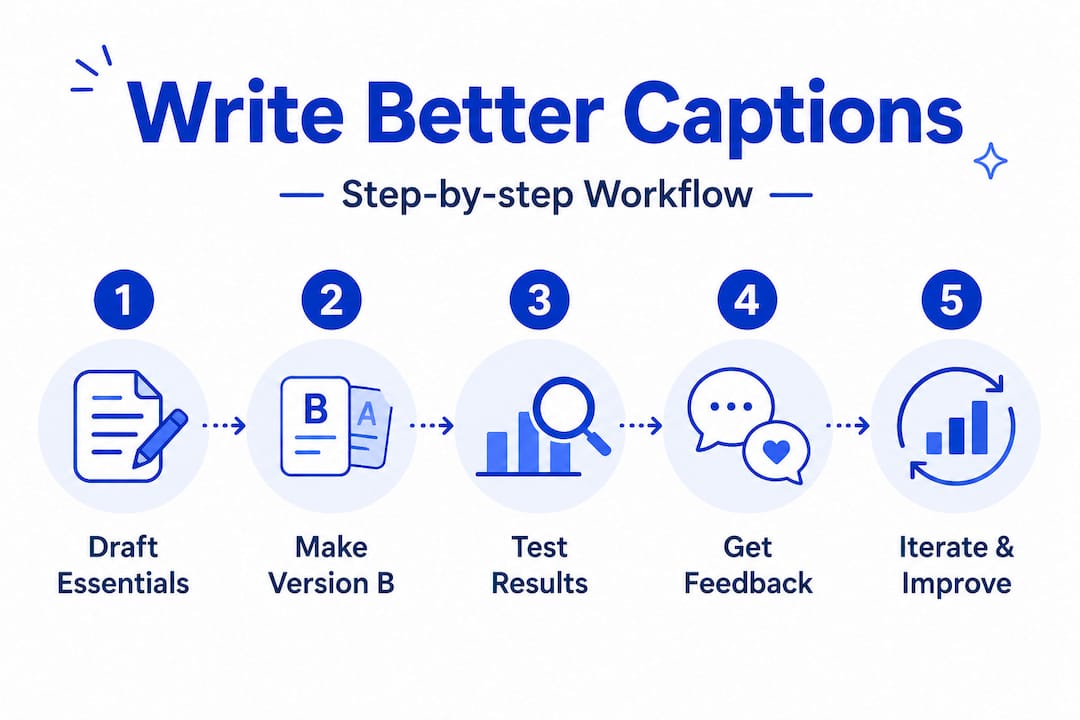
02. Create a second version (your B version) Change one element. Maybe Version A leads with the salary, and Version B leads with the role title. Or Version A mentions remote work upfront, and Version B buries it. Small differences reveal big patterns in how candidates respond.
03. Post both versions to small, separate applicant pools Use different job boards, post windows, or audience segments to test. Track how many people click through and how many actually apply.
04. Measure apply rates and application quality Volume matters, but quality matters more. Are you getting applications from people who actually meet the requirements? That's your real measure of success.
05. Gather feedback directly Ask candidates in your pipeline, "How did the caption describe the role?" Their answers will surprise you. Many candidates apply despite red flags because they need a job. Their honest feedback tells you where your caption confused or misled.
06. Adjust and iterate Apply what you learn. If Version A got more quality applications, identify why and build that pattern into future captions. Repeat this process each time you post a new role.
| Version | Lead Element | Apply Rate | Quality Score |
|---|---|---|---|
| A | Salary first | Higher | Strong |
| B | Title first | Moderate | Mixed |
| A | Remote work highlighted | Highest | Excellent |
| B | Culture note first | Lower | Average |
A/B testing job postings and tracking apply rates is the most direct way to measure what actually works versus what just sounds good in a team meeting.
Pro Tip: Use consistent recruitment tips to build a scoring system for your incoming applications. Grade candidates on how well they match the stated requirements. If most applicants don't match, your caption may be sending the wrong signals.
You can also use the sample fair hiring checklist as a benchmark after each test cycle to verify your revised caption still meets fairness standards.
Common mistakes to avoid when writing captions
As you test and refine captions, beware of common traps that can undermine your efforts. Even well-intentioned hiring managers fall into these patterns regularly. Recognizing them is the first step to eliminating them.
- 🚨 Listing "must haves" that aren't actually required — If you'd hire someone without a degree who has the right skills, stop putting "degree required" in the caption. You're blocking great candidates for no reason.
- ✗ Using exclusionary or vague language — Words like "cultural fit," "digital native," or "energetic" often signal bias without meaning anything concrete. Stick to skills and behaviors you can observe and measure.
- ✗ Leaving out pay information entirely — This is the biggest mistake. Transparency about salary attracts 44% more candidates and signals that your company respects people's time and financial reality.
- ✗ Overloading with corporate jargon — "Synergize cross-functional deliverables" is not a job duty. If a regular person can't decode it quickly, cut it.
- ✗ Skipping the application instructions — Tell candidates exactly how to apply. A missing action step creates confusion and drops your apply rate immediately.
- ✗ Copying a competitor's caption without adapting it — Every role is different. Templated captions that don't reflect your actual needs generate mismatched applicants every time.
"The caption is your handshake. A limp, vague handshake sends candidates straight to the next posting."
Use the bias-free checklist to systematically catch language problems before they go live. This is especially important if multiple people are contributing to your posting. Inconsistent or biased phrasing often sneaks in during team edits.
One more thing: failing to update captions when a role changes is a common and costly mistake. If the job evolved since you last hired for it, your caption needs to reflect that. Stale captions attract candidates for a role that no longer exists.
What most hiring guides miss about job posting captions
Here's our honest take. Most hiring advice frames transparency as a legal obligation or a nice-to-have. "Add the salary if your state requires it." "Mention diversity if it fits your brand." That framing misses the point entirely.
Transparency is a competitive advantage. When you're honest about pay, expectations, and culture in your caption, you're not just checking compliance boxes. You're signaling to every candidate that your organization respects them as a person, not just a resource to evaluate.
The data on salary transparency makes this plain. A 44% increase in candidates and a 1.3% wage boost through competition doesn't just help you fill roles faster. It builds a reputation. Candidates talk. Reviews on job sites spread. When your caption is known for being honest and fair, your pipeline improves organically over time.
There's also something deeper happening here. When you strip out gatekeeping language from your captions, you open the door to candidates from non-traditional backgrounds. People who changed careers, people without certain degrees, people who got their skills through experience rather than credentials. These candidates often bring perspectives and work ethics that your competitors are systematically blocking out.
Avoiding gatekeeping language isn't soft thinking. It's smart strategy. The unbiased posting checklist we reference throughout this article exists precisely because most hiring guides stop at "be clear and legal." We're pushing for something stronger — captions that actively welcome qualified people instead of quietly filtering them out.
Your employer brand lives or dies by these small moments. A candidate who feels respected by your caption is more likely to accept an offer, refer friends, and stay longer. A candidate who feels screened out by absurd requirements doesn't forget that experience. They tell people. That costs you.
How JobGatekeeping helps you create better job posting captions
You've got the framework. Now put it into action with the right support behind you. JobGatekeeping isn't just a platform for calling out bad job postings — it's a community resource built to help everyone do hiring better.
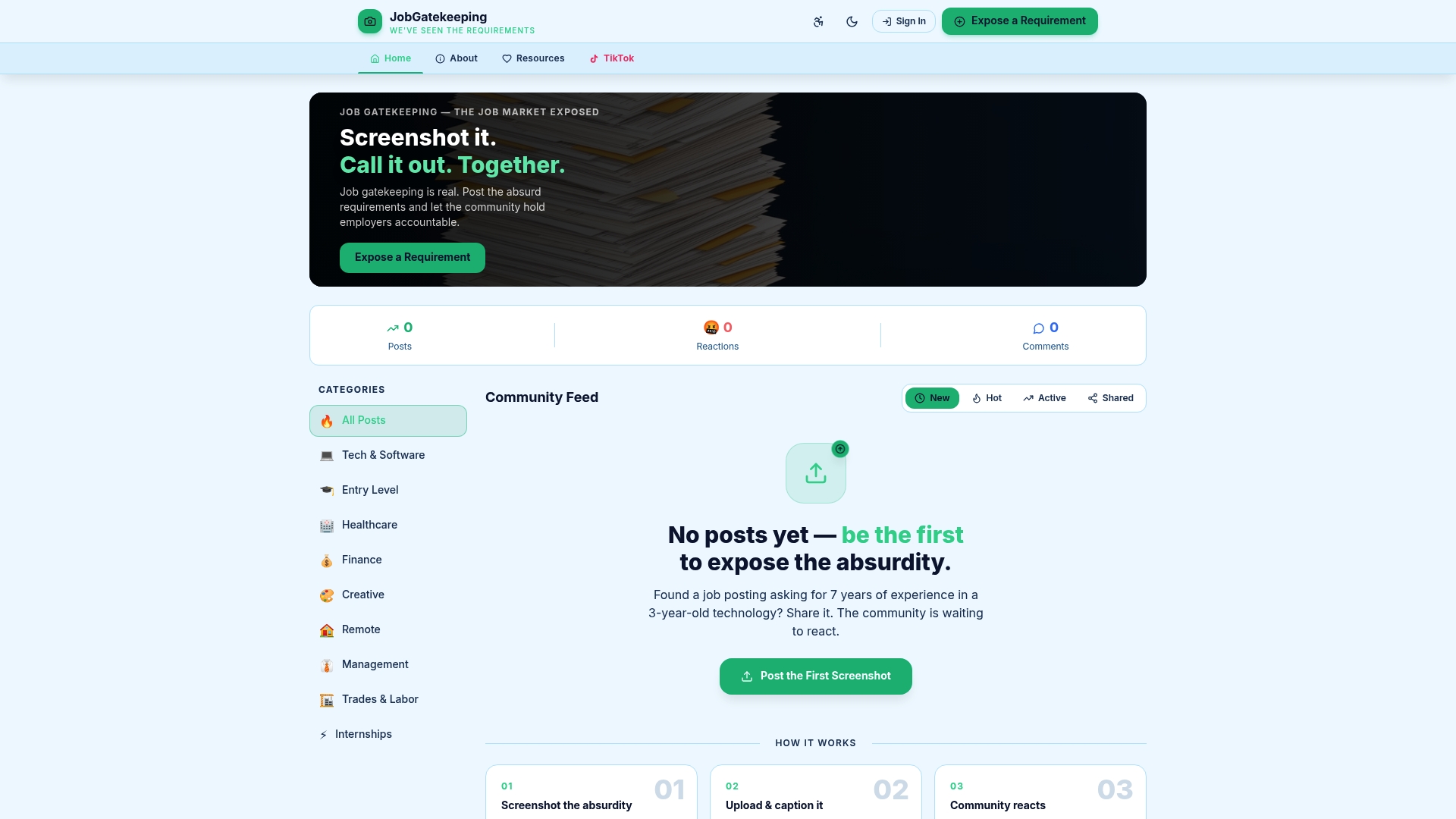
Visit JobGatekeeping to access fair hiring resources, real-world examples of both great and terrible captions, and community-driven feedback from people who have been on both sides of the hiring table. Whether you're a job seeker trying to identify gatekeeping tactics or a hiring manager ready to build more transparent postings, the tools and conversations you need are already there. Together, we can hold the job market to a higher standard — one honest caption at a time. 🔥
Frequently asked questions
What is the most important element to include in a job posting caption?
Salary transparency is the single most critical element, as 44% more candidates are attracted to postings that include pay information and it immediately signals fairness in your hiring process.
How concise should a job caption be?
A caption should focus on the role, salary range, and one or two true requirements in roughly one to two short sentences, since A/B testing shows that overloaded captions reduce apply rates and overwhelm candidates before they even reach the full description.
Should company culture be described in the caption?
Mention culture in one brief sentence if it's a real differentiator, but 70% of candidates want culture details saved for the main posting so the caption stays focused and readable.
Why is A/B testing important for job captions?
A/B testing directly shows you which captions attract the most qualified applicants by measuring apply rates and application quality side by side, removing guesswork from your hiring process entirely.